






Advanced and Precise Quality Testing Equipment
Advanced and Precise Quality Testing Equipment
Advanced and Precise Quality Testing Equipment
Advanced and Precise Quality Testing Equipment
Advanced and Precise Quality Testing Equipment
Advanced and Precise Quality Testing Equipment
Advanced and Precise Quality Testing Equipment
Advanced and Precise Quality Testing Equipment
Advanced and Precise Quality Testing Equipment
Advanced and Precise Quality Testing Equipment
Advanced and Precise Quality Testing Equipment
Working Hours : 24*7
Plot No.574 Major Asha Ram Marg Siddiq Nagar Sihani Road Ghaziabad U.P. 201001

Pakmo Testing Instrument Pvt. Ltd.

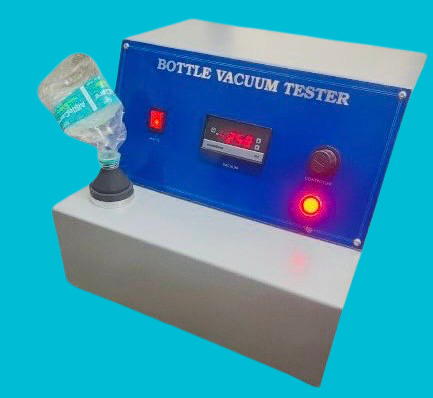
The Vacuum Tester for Empty Bottles is a vital quality control instrument designed to verify that empty bottles maintain the correct vacuum level before filling. This ensures optimal product preservation, extended shelf life, and protects against spoilage or contamination once sealed. Used extensively in the beverage and packaging industries, this tool plays a critical role in quality assurance, confirming that each container meets the vacuum specifications necessary for freshness and safety. Whether you’re handling carbonated drinks, pharmaceutical liquids, or food products, the vacuum tester is essential for maintaining consistent packaging standards across production batches.
The Vacuum Tester for Empty Bottles is an essential quality control device used to verify the vacuum integrity of empty containers before they are filled and sealed. It helps ensure product longevity, safety, and overall quality—especially in sectors where vacuum levels are critical for preservation.
Ensures both carbonated and non-carbonated beverages are packed in vacuum-sealed bottles that preserve taste, freshness, and shelf life.
Ideal for vacuum-based packaging processes in food, pharmaceutical, and cosmetic industries. It verifies that containers can maintain an airtight seal to prevent spoilage and contamination.
Acts as a reliable checkpoint in the manufacturing process. Helps ensure bottles meet strict vacuum specifications before product filling—enhancing consistency and reducing defects.
Maintaining appropriate vacuum levels is critical for preventing:
Product oxidation
Microbial contamination
Premature spoilage
Loss of flavor or potency
As consumer expectations grow for product consistency and safety, the vacuum tester becomes a key component in building brand trust and satisfaction.
The Vacuum Tester for Empty Bottles is a must-have tool for manufacturers looking to maintain top-tier product quality. It offers:
✅ Reliable vacuum validation
✅ Extended shelf life assurance
✅ Compliance with industry packaging standards
Whether you’re producing bottled beverages, food items, or sensitive pharmaceuticals, this tool ensures your packaging is airtight, safe, and market-ready.
Accurately detects and measures the vacuum level inside empty bottles, ensuring it falls within the specified range for your packaging process. This prevents spoilage, contamination, and product degradation.
Available with a precise digital or reliable analog display. Operators can easily read the vacuum levels and instantly spot any deviation from target values, ensuring quick corrective action.
Engineered for simple, intuitive use. Requires minimal training, making it easy to integrate into any existing production line without disruption or added complexity.
Delivers highly accurate vacuum readings, ensuring consistent sealing quality across all production batches. Ideal for maintaining strict quality control standards.
Equipped with user-friendly indicators or displays that provide clear, reliable vacuum data, simplifying the operator’s job and enabling faster production adjustments.
Compatible with a wide range of empty bottle types. Whether you’re a small-scale producer or a large manufacturer, this tester seamlessly fits into any production setup.
By verifying correct vacuum levels, the tester helps extend the shelf life of bottled products, ensuring better freshness, quality, and storage stability.
Safeguards the seal integrity of bottles, preventing contamination, leaks, and degradation—all vital for consumer safety and maintaining your brand’s reputation.
A vacuum leak tester is a device used to check for leaks in empty bottles by applying a controlled vacuum inside a sealed chamber or directly to the bottle. If the vacuum level drops, it indicates a leak in the bottle.
Adding {{itemName}} to cart
Added {{itemName}} to cart