Tensile Testing Machine Computerized
Call for Our Best Deal

Tensile Testing Machine Computerized
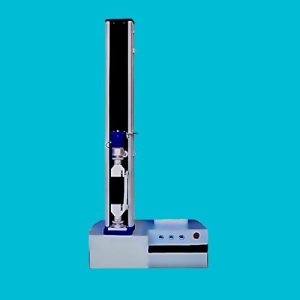
Manufacturers and suppliers of Tensile Testing Machine Computerized play a vital role in providing high-accuracy material testing solutions across a wide range of industries. These machines are engineered to evaluate the tensile strength, elongation, and deformation characteristics of various materials, ensuring that only the most reliable and robust products reach the market. Whether it’s polymers, metals, rubbers, or plastics, these machines are indispensable in quality assurance and research & development processes.
- Model:PKM-TTMC
Importance Of Tensile Testing Machine Computerized
🎯 High-Precision | 💻 Computer-Controlled | ⚙️ Industry-Compliant
Manufacturers and suppliers of computerized tensile testing machines play a crucial role in delivering accurate, consistent, and reliable testing instruments for diverse industrial applications. These machines are vital for quality assurance in sectors such as:
🔹 Polymers
🔹 Metals
🔹 Rubber
🔹 Plastics
These materials often face extreme working conditions, and failure under stress can result in costly damages or safety hazards. That’s why tensile strength testing is essential for product validation and compliance.
Why Tensile Testing Machine Computerized Strength?
Tensile strength refers to the maximum stress a material can withstand before failure when being stretched or pulled. Testing tensile strength helps manufacturers:
✅ Ensure structural integrity
✅ Prevent material failure
✅ Comply with safety regulations
✅ Improve product performance
Working Principle – How the Machine Operates
🧾 Specimen Preparation
The sample is cut and shaped to standard dimensions using a cutting die.🧲 Clamping
The specimen is held firmly between two grips.🔼 Force Application
The grips move apart gradually, applying a tensile force to the sample.💥 Breaking Point
The machine measures the peak load at which the sample breaks.📈 Digital Output & Analysis
Data is displayed digitally and can be exported to a computer for detailed analysis.
Key Features of Pakmo’s Computerized Tensile Testing Machine
| 🛠️ Feature | 📋 Description |
|---|---|
| 💻 Computerized System | Real-time data capture with software for analysis and reporting |
| 🎯 Precision Load Measurement | High-sensitivity sensors for accurate force detection |
| 🔄 Multiple Test Modes | Supports tensile, compression, peel, bond, and seal tests |
| ⚡ Digital Display | Peak load and elongation are shown clearly on the screen |
| 📤 Data Export | USB/PC connectivity for easy result tracking and archiving |
| 🏗️ Heavy-Duty Build | Rugged construction for long-term lab or shop-floor use |
| 📦 Wide Capacity Range | 50 kgf to 5000 kgf to suit all industrial needs |
Available Load Capacities
✅ 50 Kgf
✅ 100 Kgf
✅ 250 Kgf
✅ 500 Kgf
✅ 1000 Kgf
✅ 2000 Kgf
✅ 3000 Kgf
✅ 4000 Kgf
✅ 5000 Kgf
Tests You Can Perform
🔧 Tensile Strength Test
🔩 Compression Test
📏 Top Load Test
🔁 Push-Pull Test
🔗 Adhesion Test
📎 Peel Bond Test
🔒 Seal Strength Test
Why Choose Pakmo?
✅ Proven Reliability in demanding industrial environments
✅ Made for Accuracy, repeatability & ease of use
✅ Dedicated Support & customization available
✅ Test multiple material types with one machine
📐 Technical Specifications
| 🧩 Feature | 📊 Specification |
|---|---|
| 🔩 Screw Mechanism | Single screw mechanism driven by high-performance motor and gearbox |
| ↕️ Vertical Clearance | 500 mm (ample space for specimen elongation) |
| 🧱 Exterior Body | Durable powder-coated finish for long-term protection |
| 📟 Display | Digital LCD for clear, real-time test readings |
| 🏋️ Capacity Range | 50 / 100 / 250 / 500 / 1000 / 2000 / 3000 / 4000 / 5000 Kgf |
| ⚖️ Load Cell | High-accuracy ‘S-Type’ load cell from reputed brands |
| 🧮 Load Least Count | 5g, 10g, 20g, 50g, 100g, 200g, 300g, 400g, 500g options |
| 📈 Displayed Results | Real-time Load and Elongation |
| 📏 Elongation Least Count | 0.1 mm precision |
| 🌀 Speed Range | Adjustable from 40 mm/min to 400 mm/min |
| 🧪 Load Units | Kilogram-force (Kgf) |
| 🎚️ Speed Control | Precision AC drive for smooth speed regulation |
| ⚙️ Motor | Industrial-grade induction motor with gearbox for consistent motion |
| 🧷 Test Jaws | Vice type (standard); customizable jaws available on request |
| 🔌 Power Supply | 230V AC, 50Hz, Single Phase |
| 🔗 Communication Port | RS232 interface for seamless PC connectivity |
Advanced Features
| 🌟 Feature | 🔍 Description |
|---|---|
| 🎯 Highly Sensitive Load Sensor | Offers excellent linearity and repeatability for precision testing |
| ↕️ Cross Head Travel | 500 mm grip-to-grip movement for standard-length specimens |
| 🏗️ Single Column Rugged Structure | Sturdy frame for stable and vibration-free performance |
| 🚫 Safety Limit Switches | Prevents over-travel and machine damage during operation |
| 🔩 Hardened Lead Screws | Ensures frictionless and smooth movement of the crosshead |
| 📏 Load Cell Calibration | Calibrated using NPL-approved proving ring/dynamometers |
| 🧠 Microcontroller-Based System | Controls test functions with high-speed accuracy |
| 🧊 Peak Hold Function | Captures and holds maximum force value during testing |
| 💡 Bright LED Display | Clear visibility of all test parameters and results |
| 📊 Force vs. Elongation Graph | Real-time graphical display for better analysis |
| 🧾 Smart Data Management | Input details like Product ID, Sample ID, Shape, Operator, Company Name |
| ✂️ Auto Cut-Off | Automatically stops the machine after sample break for safety and ease |
| ✅ Instant Result Evaluation | Immediate and accurate analysis right after the test |
A computerized tensile testing machine is an advanced version of a tensile tester that connects to a computer for data acquisition, analysis, and reporting.
A digital tensile tester displays results on a digital screen, while a computerized model provides real-time data visualization, advanced analysis, and report generation via dedicated software.
Industries like plastics, rubber, textiles, metals, packaging, and automotive use these machines for quality control and material research.
- The sample is placed between two grips.
- A motorized system applies force until failure.
- Load and elongation data are collected and analyzed using the software.
- Load cell (for force measurement)
- Grips & fixtures (to hold test specimens)
- Motorized drive system (for controlled movement)
- Control unit & software (for automation and data processing)
Tensile Testing Machine Computerized
Call for Our Best Deal
Tensile Testing Machine Computerized
Call for Our Best Deal
Tensile Testing Machine Computerized
Manufacturers and suppliers of Tensile Testing Machine Computerized play a vital role in providing high-accuracy material testing solutions across a wide range of industries. These machines are engineered to evaluate the tensile strength, elongation, and deformation characteristics of various materials, ensuring that only the most reliable and robust products reach the market. Whether it’s polymers, metals, rubbers, or plastics, these machines are indispensable in quality assurance and research & development processes.
- Model:PKM-TTMC
Importance Of Tensile Testing Machine Computerized
🎯 High-Precision | 💻 Computer-Controlled | ⚙️ Industry-Compliant
Manufacturers and suppliers of computerized tensile testing machines play a crucial role in delivering accurate, consistent, and reliable testing instruments for diverse industrial applications. These machines are vital for quality assurance in sectors such as:
🔹 Polymers
🔹 Metals
🔹 Rubber
🔹 Plastics
These materials often face extreme working conditions, and failure under stress can result in costly damages or safety hazards. That’s why tensile strength testing is essential for product validation and compliance.
Why Tensile Testing Machine Computerized Strength?
Tensile strength refers to the maximum stress a material can withstand before failure when being stretched or pulled. Testing tensile strength helps manufacturers:
✅ Ensure structural integrity
✅ Prevent material failure
✅ Comply with safety regulations
✅ Improve product performance
Working Principle – How the Machine Operates
🧾 Specimen Preparation
The sample is cut and shaped to standard dimensions using a cutting die.🧲 Clamping
The specimen is held firmly between two grips.🔼 Force Application
The grips move apart gradually, applying a tensile force to the sample.💥 Breaking Point
The machine measures the peak load at which the sample breaks.📈 Digital Output & Analysis
Data is displayed digitally and can be exported to a computer for detailed analysis.
Key Features of Pakmo’s Computerized Tensile Testing Machine
| 🛠️ Feature | 📋 Description |
|---|---|
| 💻 Computerized System | Real-time data capture with software for analysis and reporting |
| 🎯 Precision Load Measurement | High-sensitivity sensors for accurate force detection |
| 🔄 Multiple Test Modes | Supports tensile, compression, peel, bond, and seal tests |
| ⚡ Digital Display | Peak load and elongation are shown clearly on the screen |
| 📤 Data Export | USB/PC connectivity for easy result tracking and archiving |
| 🏗️ Heavy-Duty Build | Rugged construction for long-term lab or shop-floor use |
| 📦 Wide Capacity Range | 50 kgf to 5000 kgf to suit all industrial needs |
Available Load Capacities
✅ 50 Kgf
✅ 100 Kgf
✅ 250 Kgf
✅ 500 Kgf
✅ 1000 Kgf
✅ 2000 Kgf
✅ 3000 Kgf
✅ 4000 Kgf
✅ 5000 Kgf
Tests You Can Perform
🔧 Tensile Strength Test
🔩 Compression Test
📏 Top Load Test
🔁 Push-Pull Test
🔗 Adhesion Test
📎 Peel Bond Test
🔒 Seal Strength Test
Why Choose Pakmo?
✅ Proven Reliability in demanding industrial environments
✅ Made for Accuracy, repeatability & ease of use
✅ Dedicated Support & customization available
✅ Test multiple material types with one machine
📐 Technical Specifications
| 🧩 Feature | 📊 Specification |
|---|---|
| 🔩 Screw Mechanism | Single screw mechanism driven by high-performance motor and gearbox |
| ↕️ Vertical Clearance | 500 mm (ample space for specimen elongation) |
| 🧱 Exterior Body | Durable powder-coated finish for long-term protection |
| 📟 Display | Digital LCD for clear, real-time test readings |
| 🏋️ Capacity Range | 50 / 100 / 250 / 500 / 1000 / 2000 / 3000 / 4000 / 5000 Kgf |
| ⚖️ Load Cell | High-accuracy ‘S-Type’ load cell from reputed brands |
| 🧮 Load Least Count | 5g, 10g, 20g, 50g, 100g, 200g, 300g, 400g, 500g options |
| 📈 Displayed Results | Real-time Load and Elongation |
| 📏 Elongation Least Count | 0.1 mm precision |
| 🌀 Speed Range | Adjustable from 40 mm/min to 400 mm/min |
| 🧪 Load Units | Kilogram-force (Kgf) |
| 🎚️ Speed Control | Precision AC drive for smooth speed regulation |
| ⚙️ Motor | Industrial-grade induction motor with gearbox for consistent motion |
| 🧷 Test Jaws | Vice type (standard); customizable jaws available on request |
| 🔌 Power Supply | 230V AC, 50Hz, Single Phase |
| 🔗 Communication Port | RS232 interface for seamless PC connectivity |
Advanced Features
| 🌟 Feature | 🔍 Description |
|---|---|
| 🎯 Highly Sensitive Load Sensor | Offers excellent linearity and repeatability for precision testing |
| ↕️ Cross Head Travel | 500 mm grip-to-grip movement for standard-length specimens |
| 🏗️ Single Column Rugged Structure | Sturdy frame for stable and vibration-free performance |
| 🚫 Safety Limit Switches | Prevents over-travel and machine damage during operation |
| 🔩 Hardened Lead Screws | Ensures frictionless and smooth movement of the crosshead |
| 📏 Load Cell Calibration | Calibrated using NPL-approved proving ring/dynamometers |
| 🧠 Microcontroller-Based System | Controls test functions with high-speed accuracy |
| 🧊 Peak Hold Function | Captures and holds maximum force value during testing |
| 💡 Bright LED Display | Clear visibility of all test parameters and results |
| 📊 Force vs. Elongation Graph | Real-time graphical display for better analysis |
| 🧾 Smart Data Management | Input details like Product ID, Sample ID, Shape, Operator, Company Name |
| ✂️ Auto Cut-Off | Automatically stops the machine after sample break for safety and ease |
| ✅ Instant Result Evaluation | Immediate and accurate analysis right after the test |
A computerized tensile testing machine is an advanced version of a tensile tester that connects to a computer for data acquisition, analysis, and reporting.
A digital tensile tester displays results on a digital screen, while a computerized model provides real-time data visualization, advanced analysis, and report generation via dedicated software.
Industries like plastics, rubber, textiles, metals, packaging, and automotive use these machines for quality control and material research.
- The sample is placed between two grips.
- A motorized system applies force until failure.
- Load and elongation data are collected and analyzed using the software.
- Load cell (for force measurement)
- Grips & fixtures (to hold test specimens)
- Motorized drive system (for controlled movement)
- Control unit & software (for automation and data processing)