


Advanced and Precise Quality Testing Equipment
Advanced and Precise Quality Testing Equipment
Advanced and Precise Quality Testing Equipment
Advanced and Precise Quality Testing Equipment
Advanced and Precise Quality Testing Equipment
Advanced and Precise Quality Testing Equipment
Advanced and Precise Quality Testing Equipment
Advanced and Precise Quality Testing Equipment
Advanced and Precise Quality Testing Equipment
Advanced and Precise Quality Testing Equipment
Advanced and Precise Quality Testing Equipment
Working Hours : 24*7
Plot No.574 Major Asha Ram Marg Siddiq Nagar Sihani Road Ghaziabad U.P. 201001

Pakmo Testing Instrument Pvt. Ltd.

The Environmental Stress Cracking Resistance Tester (ESCR) is a critical technological advancement for industries that rely on materials capable of withstanding harsh environmental conditions. Environmental Stress Cracking Resistance Tester instrument plays a key role in assessing how materials, such as plastics, rubber, and polymers, react to environmental factors like humidity, moisture, and chemical fumes commonly encountered in industrial settings.
Feature | Description |
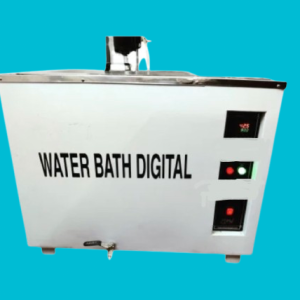
Size | Inner Bath 12” x 14” x 12” |
Material of Construction | Inner Bath Stainless Steel, Outer Mild Steel |
Temperature Controller | Microprocessor-based digital PID controller (up to 200°C) with ±0.5°C accuracy |
Heating Load | As per bath requirement |
Circulation | Induction motor with stirrer |
Testing Capacity | Conducts six tests simultaneously |
Accessories | Cutting Die, Nicking Jig, Bending cum Transfer Tool, Specimen Holder, Test Tubes (6), and Rubber Corks (6) |
Power Requirement | 230V AC, Single Phase, 50 Hz |
Paint Finish | Powder Coating |
Test Solution | Igepal (arranged by customer) |
A: Environmental Stress Cracking is the development of cracks in plastics due to combined stress and chemical exposure without reaching typical failure strength.
A: The tester simulates industrial environmental conditions like humidity, temperature, and chemical exposure while subjecting the sample to stress to observe crack propagation.
A: Primarily plastics, polymers, and rubber are tested due to their widespread industrial use and susceptibility to environmental stresses.
A: Environmental Stress Cracking Resistance Tester ensures the durability and reliability of products, helping manufacturers identify potential failures before market release.
A: While primarily assessing resistance to cracking, the data from ESCR testing aids in predicting product lifespan under specific environmental conditions.
A: In the Indian market, the price typically ranges from ₹500,000 to ₹2,500,000, depending on the technology, brand, features, and service terms.
The Environmental Stress Cracking Resistance Tester is an indispensable tool for industries focused on material durability and quality assurance. By simulating harsh environmental conditions, it ensures that products meet stringent industry standards, contributing to better customer satisfaction and long-term product success.
Feature | Description |
Size | Inner Bath 12” x 14” x 12” |
Material of Construction | Inner Bath Stainless Steel, Outer Mild Steel |
Temperature Controller | Microprocessor-based digital PID controller (up to 200°C) with ±0.5°C accuracy |
Heating Load | As per bath requirement |
Circulation | Induction motor with stirrer |
Testing Capacity | Conducts six tests simultaneously |
Accessories | Cutting Die, Nicking Jig, Bending cum Transfer Tool, Specimen Holder, Test Tubes (6), and Rubber Corks (6) |
Power Requirement | 230V AC, Single Phase, 50 Hz |
Paint Finish | Powder Coating |
Test Solution | Igepal (arranged by customer) |
Drain System: Integral water drain system for efficient operation
A: Environmental Stress Cracking is the development of cracks in plastics due to combined stress and chemical exposure without reaching typical failure strength.
A: The tester simulates industrial environmental conditions like humidity, temperature, and chemical exposure while subjecting the sample to stress to observe crack propagationrel until it melts. A specified weight then pushes the molten polymer through a calibrated die, and the amount extruded in ten minutes is recorded as MFI (g/10 min).
A: Primarily plastics, polymers, and rubber are tested due to their widespread industrial use and susceptibility to environmental stresses.
A: It ensures the durability and reliability of products, helping manufacturers identify potential failures before market release.
Adding {{itemName}} to cart
Added {{itemName}} to cart