Co-efficient Of Friction Tester- Computerised -(Static & Kinetic)
Call for Our Best Deal
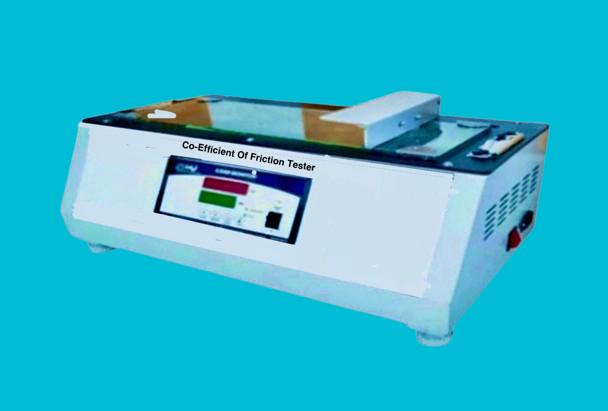
Co-efficient Of Friction Tester- Computerised -(Static & Kinetic)
The Pakmo Computerized Co-efficient Of Friction Tester is a premium-quality, highly precise instrument designed for modern packaging and paper industries. It measures the static and kinetic friction between two surfaces, simulating real-world motion like sliding, stacking, or handling. With its computerized interface and digital data output, it helps manufacturers maintain product consistency, optimize material handling, and ensure quality control with ease.
The Pakmo COF Tester (Computerized) is a cutting-edge quality testing instrument designed to measure the frictional properties of materials with exceptional accuracy. Widely used in the paper and packaging industries, it simulates real-world conditions like storage, handling, and transportation to ensure your materials perform flawlessly under pressure.
- Model:PKM-COF
Working Principle of Pakmo Computerized Co-efficient Of Friction Tester
Precise Simulation of Surface Friction Behavior
The Pakmo Coefficient of Friction (COF) Tester operates on a simple yet scientifically reliable principle of measuring the resistance to motion between two surfaces in contact under a standard load. Here’s how it works:
Step-by-Step Working Principle Of Co-efficient Of Friction Tester
1️⃣ Sample Placement
A test specimen (film, paper, or sheet) is placed on the smooth testing platform (usually stainless steel with a glass insert), and a sled with a fixed weight (200 gm) is placed on top of the sample.
2️⃣ Initiation of Motion
The sled is connected to the drive mechanism via a pulley or cord. Once the test begins, the sled is dragged at a constant speed across the sample surface.
3️⃣ Force Measurement
As the sled moves, the load cell continuously measures the force required to overcome the resistance between the sled and the sample—this includes:
Static Friction (μs): The initial force needed to begin the movement.
Dynamic Friction (μk): The force needed to keep the sled moving at a constant speed.
4️⃣ Digital Processing
The built-in microprocessor records and processes these friction values, displaying them in real-time on the screen and sending the data to a connected computer via RS-232.
5️⃣ Result Output
The results are shown both numerically and graphically, enabling the user to analyze:
Peak load
Coefficient of static friction
Coefficient of dynamic friction
Any surface variation trends
Scientific Basis
The COF is calculated using the formula:
μ=FN\mu = \frac{F}{N}μ=NF
Where:
μ = Coefficient of Friction
F = Force required to move the sled
N = Normal force (weight of the sled)
Why COF Testing Matters
For Packaging Manufacturers:
🔒 Quality Assurance: Confirms that packaging materials resist damage during transit and stacking.
📦 Product Integrity: Prevents scuffing, tearing, or defacing, preserving the product’s appearance and safety.
🚚 Operational Efficiency: Optimizes glide and grip for automated systems and smoother logistics handling.
Testing Process Overview
Specimen Preparation:
Two test samples (usually printed surfaces) are positioned face-to-face.Friction Simulation:
The samples undergo circular rubbing strokes to replicate motion and create friction.Data Evaluation:
Frictional resistance and surface wear are measured accurately.Result Analysis:
COF values are displayed digitally and exported to a computer for graphical interpretation and reporting.
Applications
🏷️ Packaging Industry: Labels, pouches, laminated films, and flexible packaging.
📄 Paper Industry: Coated/uncoated sheets, paperboard, and specialty papers.
🧪 Quality Control Labs: Routine friction testing as per global packaging standards.
Key Benefits
📊 Comprehensive Analysis: Simultaneously evaluates static and kinetic friction.
💾 Smart Data Storage: Stores up to 9 test readings for quick access and comparison.
🛠️ Built to Last: Robust design with premium components for long-term industrial use.
🎯 High Accuracy: Microprocessor-based controls ensure precise, reliable readings.
Conclusion
The Pakmo Computerized COF Tester offers unmatched precision, robust construction, and smart digital integration. It’s a reliable partner in quality control for industries that demand consistent packaging performance. Whether you’re ensuring slip-resistance or optimizing transport safety, Pakmo delivers confidence through advanced testing.
🧾 Technical Specifications
| 🔧 Parameter | 📋 Details |
|---|---|
| ⚖️ Load Cell Capacity | 1 Kgf (custom capacities available) |
| 🖥️ Display | Microprocessor-based with memory of peak load |
| 🔄 Speed Indication | LCD Display |
| 🎯 Resolution | 1 gm with ±1 gm accuracy |
| ⚙️ Motor Speed | Fixed as per standard |
| 💻 Computer Interface | RS-232 connection |
| 📈 COF Calculation | Static and dynamic results with graphical output |
| 🧱 Platform Material | Polished stainless steel with glass plate |
| 📐 Sled Size | 63.5 mm x 63.5 mm x 6 mm |
| ⚖️ Sled Weight | 200 gm |
| 🔌 Power Supply | 220 V, 50 Hz |
| 🧰 Model Type | Tabletop |
| 🎨 Paint Finish | Powder-coated |
🌟 Key Features
🌐 Feature 🔍 Description 🖥️ Microprocessor-Based Display Ensures accurate and reliable test results with peak load memory. ⚖️ Dynamic & Static COF Results Measures both static and kinetic friction, offering complete friction profiles. 💻 Computer Interface RS-232 connectivity for smooth data transfer to Windows-based software. 🧱 Sturdy Structure Built with high-grade stainless steel, ensuring durability and longevity. 🕹️ User-Friendly Operation Equipped with feather-touch controls for effortless handling and setup. 🔄 Self-Calibration Automatic load and travel calibration for consistently precise measurements. 🧰 Compact Tabletop Design Space-saving model suitable for labs and production units alike.
The coefficient of friction (COF) is a dimensionless number that represents the frictional resistance between two surfaces in contact. It is the ratio of the force of friction to the normal force pressing the surfaces together.
There are two main types:
- Static COF (μs): The friction when an object is at rest and just about to move.
- Kinetic COF (μk): The friction when an object is already moving.
- COF=Normal Force(N)Frictional Force(F)
where:
- FFF is the force required to move the object,
- NNN is the perpendicular force pressing the two surfaces together.
- Low COF (0.1 - 0.3): Teflon, ice on steel
- Medium COF (0.3 - 0.6): Rubber on dry pavement, wood on wood
- High COF (0.6 - 1.0+): Rubber on wet pavement, sandpaper on wood
- Surface roughness
- Material composition
- Presence of lubrication
- Temperature and humidity
- Load or pressure applied


Co-efficient Of Friction Tester- Computerised -(Static & Kinetic)
Call for Our Best Deal
Co-efficient Of Friction Tester- Computerised -(Static & Kinetic)
Call for Our Best Deal
Co-efficient Of Friction Tester- Computerised -(Static & Kinetic)
The Pakmo Computerized Co-efficient Of Friction Tester is a premium-quality, highly precise instrument designed for modern packaging and paper industries. It measures the static and kinetic friction between two surfaces, simulating real-world motion like sliding, stacking, or handling. With its computerized interface and digital data output, it helps manufacturers maintain product consistency, optimize material handling, and ensure quality control with ease.
The Pakmo COF Tester (Computerized) is a cutting-edge quality testing instrument designed to measure the frictional properties of materials with exceptional accuracy. Widely used in the paper and packaging industries, it simulates real-world conditions like storage, handling, and transportation to ensure your materials perform flawlessly under pressure.
- Model:PKM-COF
Working Principle of Pakmo Computerized Co-efficient Of Friction Tester
Precise Simulation of Surface Friction Behavior
The Pakmo Coefficient of Friction (COF) Tester operates on a simple yet scientifically reliable principle of measuring the resistance to motion between two surfaces in contact under a standard load. Here’s how it works:
Step-by-Step Working Principle Of Co-efficient Of Friction Tester
1️⃣ Sample Placement
A test specimen (film, paper, or sheet) is placed on the smooth testing platform (usually stainless steel with a glass insert), and a sled with a fixed weight (200 gm) is placed on top of the sample.
2️⃣ Initiation of Motion
The sled is connected to the drive mechanism via a pulley or cord. Once the test begins, the sled is dragged at a constant speed across the sample surface.
3️⃣ Force Measurement
As the sled moves, the load cell continuously measures the force required to overcome the resistance between the sled and the sample—this includes:
Static Friction (μs): The initial force needed to begin the movement.
Dynamic Friction (μk): The force needed to keep the sled moving at a constant speed.
4️⃣ Digital Processing
The built-in microprocessor records and processes these friction values, displaying them in real-time on the screen and sending the data to a connected computer via RS-232.
5️⃣ Result Output
The results are shown both numerically and graphically, enabling the user to analyze:
Peak load
Coefficient of static friction
Coefficient of dynamic friction
Any surface variation trends
Scientific Basis
The COF is calculated using the formula:
μ=FN\mu = \frac{F}{N}μ=NF
Where:
μ = Coefficient of Friction
F = Force required to move the sled
N = Normal force (weight of the sled)
Why COF Testing Matters
For Packaging Manufacturers:
🔒 Quality Assurance: Confirms that packaging materials resist damage during transit and stacking.
📦 Product Integrity: Prevents scuffing, tearing, or defacing, preserving the product’s appearance and safety.
🚚 Operational Efficiency: Optimizes glide and grip for automated systems and smoother logistics handling.
Testing Process Overview
Specimen Preparation:
Two test samples (usually printed surfaces) are positioned face-to-face.Friction Simulation:
The samples undergo circular rubbing strokes to replicate motion and create friction.Data Evaluation:
Frictional resistance and surface wear are measured accurately.Result Analysis:
COF values are displayed digitally and exported to a computer for graphical interpretation and reporting.
Applications
🏷️ Packaging Industry: Labels, pouches, laminated films, and flexible packaging.
📄 Paper Industry: Coated/uncoated sheets, paperboard, and specialty papers.
🧪 Quality Control Labs: Routine friction testing as per global packaging standards.
Key Benefits
📊 Comprehensive Analysis: Simultaneously evaluates static and kinetic friction.
💾 Smart Data Storage: Stores up to 9 test readings for quick access and comparison.
🛠️ Built to Last: Robust design with premium components for long-term industrial use.
🎯 High Accuracy: Microprocessor-based controls ensure precise, reliable readings.
Conclusion
The Pakmo Computerized COF Tester offers unmatched precision, robust construction, and smart digital integration. It’s a reliable partner in quality control for industries that demand consistent packaging performance. Whether you’re ensuring slip-resistance or optimizing transport safety, Pakmo delivers confidence through advanced testing.
🧾 Technical Specifications
| 🔧 Parameter | 📋 Details |
|---|---|
| ⚖️ Load Cell Capacity | 1 Kgf (custom capacities available) |
| 🖥️ Display | Microprocessor-based with memory of peak load |
| 🔄 Speed Indication | LCD Display |
| 🎯 Resolution | 1 gm with ±1 gm accuracy |
| ⚙️ Motor Speed | Fixed as per standard |
| 💻 Computer Interface | RS-232 connection |
| 📈 COF Calculation | Static and dynamic results with graphical output |
| 🧱 Platform Material | Polished stainless steel with glass plate |
| 📐 Sled Size | 63.5 mm x 63.5 mm x 6 mm |
| ⚖️ Sled Weight | 200 gm |
| 🔌 Power Supply | 220 V, 50 Hz |
| 🧰 Model Type | Tabletop |
| 🎨 Paint Finish | Powder-coated |
🌟 Key Features
🌐 Feature 🔍 Description 🖥️ Microprocessor-Based Display Ensures accurate and reliable test results with peak load memory. ⚖️ Dynamic & Static COF Results Measures both static and kinetic friction, offering complete friction profiles. 💻 Computer Interface RS-232 connectivity for smooth data transfer to Windows-based software. 🧱 Sturdy Structure Built with high-grade stainless steel, ensuring durability and longevity. 🕹️ User-Friendly Operation Equipped with feather-touch controls for effortless handling and setup. 🔄 Self-Calibration Automatic load and travel calibration for consistently precise measurements. 🧰 Compact Tabletop Design Space-saving model suitable for labs and production units alike.
The coefficient of friction (COF) is a dimensionless number that represents the frictional resistance between two surfaces in contact. It is the ratio of the force of friction to the normal force pressing the surfaces together.
There are two main types:
- Static COF (μs): The friction when an object is at rest and just about to move.
- Kinetic COF (μk): The friction when an object is already moving.
- COF=Normal Force(N)Frictional Force(F)
where:
- FFF is the force required to move the object,
- NNN is the perpendicular force pressing the two surfaces together.
- Low COF (0.1 - 0.3): Teflon, ice on steel
- Medium COF (0.3 - 0.6): Rubber on dry pavement, wood on wood
- High COF (0.6 - 1.0+): Rubber on wet pavement, sandpaper on wood
- Surface roughness
- Material composition
- Presence of lubrication
- Temperature and humidity
- Load or pressure applied